
Cover photo from Canva
By Juan Carlos Lozano Herrera – Founder & CEO and Catalina Garau – Head of Growth, Innpactia
We are halfway to meeting the Sustainable Development Goals (SDGs) and we are still in the prototyping stage, rather than implementing the success formula already found. One of the main unresolved issues is deploying the financial resources needed to implement the 17 ambitious SDGs and 169 targets to eradicate extreme poverty and save the planet. Developing countries face an outstanding investment gap of 2.5 trillion dollars per year; this enhances the role of private sector contributions, as the main complement to traditional cooperation and public resources.
Innpactia’s last report in alliance with Civicus, “Barriers and costs. Inequities and inefficiencies” (2022) identifies the high transaction costs for both, recipients and donors, in the resource allocation process for impact investment. According to our market calculations, the current connection and operating costs represent between 35% and 52% of the available amounts. The report highlights a situation that no one in the impact ecosystem should ignore.
The lack of economies of scale and collective processes undermines the good intentions behind the distribution of resources and makes investments more expensive. In many cases, each donor replicates the same process one after the other, and sometimes they even review the same proposals, resulting in excessive workloads for all actors involved.
For these and other reasons, new platforms, tools and collective instruments are being lauded as an emerging trend and thus, moving impact investment into the mainstream. Some of the main advantages of these new models are:
- Reduction in transaction costs: collective processes help lower costs through better economies of scale.
- Better knowledge management: co-investors share techniques and decision-making criteria, good practices around portfolio management and monitoring processes, and even technical knowledge on the issues they are investing in.
- Coordination between donors: ensuring that support is delivered in accordance with each co-investor’s priorities. Coordination to prevent one donor from financing any counterproductive issues for the other, or even all of them from financing the same issue, leaving others unattended.
- A kinder and much simpler experience for social organisations and entrepreneurs: the more there are collective investments, the fewer different ways of applying for resources there will be, which simplifies access to financial capital and democratises access to funds.
Catalytic capital has a new purpose: to teach traditional investors how to boost their impact investment and improve risk conditions. Therefore, if those who have the experience to invest in impact today do not get used to doing it collectively, it will not be possible to encourage an increase in more private investment capital (in blended finance) to address the 2030 Agenda.
All these studies and learnings have led us to deeply understand the systemic circumstances and technology leveraged to create solutions to deal with the biggest challenges of impact ecosystem actors. Paying close attention to resolving information asymmetries and addressing the operational problems that today prevent the existence of more collective investments, we have built a collective investment management platform to create digital and agile impact investment vehicles.
Together with partners such as Sociedad de Agricultores de Colombia (SAC), Fundación Santo Domingo and Luminate, among others, we have experimented and created a digital product that speeds up the search for and evaluation of projects, matches projects with advisors who provide technical assistance, collects impact reports, and offers financial services, increasing transparency around resource management. In the future, more tools like this will be created to collectively invest in non-refundable donation funds, impact investment funds in ventures, blended finance mechanisms and even pay-as-you-go models, saving time and money and maximising the scale of impact.
The change has to take place within each philanthropic organisation, each impact investment fund and international cooperation agency. Only with greater openness to innovative and neutral platforms and tools, more desire to think and work differently, enrich ourselves with new paradigms, and innovate in the types of contracting, will we generate more favourable conditions to achieve the SDGs. If we set this goal to guide our decisions and passions, we will be part of the generation that defeats extreme poverty and helps save the planet.
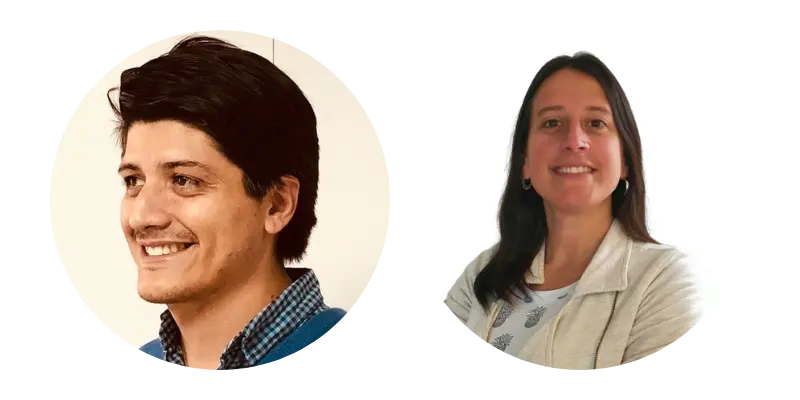
Juan is the Founder and CEO of Innpactia, an investment platform for impact. He grew up professionally in voluntary organizations and today is a social entrepreneur, having worked in several civil society organizations, such as CISV International, government entities and leading the international development program for the British Embassy in Colombia.
Catalina is a professional in Social Communications specialising in Digital Marketing and Growth. She has more than 10 years of experience in companies with SASS products and technology industries. Passionate about the social sector and impact entrepreneurship.
To get first access to our blogs every month, subscribe to our newsletter here.